Food & Drink
Diageo Share Price Latest UK Price Forecast Chart and Dividend Outlook

Diageo is one of the world’s leading beverages companies whose range comprises Guinness, Johnnie Walker, Smirnoff, Don Julio and Tanqueray. The company’s listed shares in London draw the attention of investors interested in international consumer goods stocks, dividends and potentially their recovery in the future. Problems with recent finances, lower demand for the company’s spirits in some markets and changes in the dividend policy of the company draw the attention of investors more now than ever before. However, great performance of Guinness, growth in ready-to-drink products and the launch of a large-scale cost-cutting program may present new possibilities.
Diageo Share Price London, UK Today and Latest Market Update
The Diageo share price is closely followed by UK investors because Diageo is one of the world’s largest beverage alcohol companies and a major constituent of the London market. The company trades in London under the ticker DGE and owns internationally recognised brands including Guinness, Johnnie Walker, Smirnoff, Don Julio, Tanqueray, Captain Morgan and Baileys. For investors checking the Diageo share price UK today, it is important to remember that the quoted market value changes throughout the trading session and can move because of company announcements, economic data, currency movements, interest rates and overall market sentiment. A single day’s movement is therefore not enough to judge whether the business is becoming more or less attractive. Investors should combine the current quotation with earnings, free cash flow, debt, dividend expectations and future growth prospects.
Diageo’s latest financial performance provides important context for the current market valuation. For fiscal 2026, the company reported net sales of approximately $19.64 billion, down 3% from the previous year. This shows why investors have become more cautious about the business. North American spirits have faced pressure, while Guinness and ready-to-drink products have delivered stronger results. The company is now implementing a major turnaround programme intended to improve efficiency and profitability. Management has announced a three-year programme targeting approximately $1 billion of savings, which could help margins if executed effectively. The key issue for shareholders is whether these savings can be achieved while continuing to invest sufficiently in marketing, innovation and the brands that generate long-term demand.
For someone checking the London market every day, it is useful to distinguish between market sentiment and changes in the underlying business. Shares can rise or fall significantly even when there has been no major change to the company’s operations. Analyst upgrades, economic news, currency movements and changes in expectations can all influence the market. Long-term investors should therefore avoid making decisions simply because the stock has risen or fallen during one session. Instead, they can compare the current valuation with expected earnings, cash generation, debt levels and the company’s ability to restore sustainable growth. This provides a more useful framework for deciding whether the current market valuation reflects genuine improvement or simply changing investor sentiment.
Diageo Share Price Chart, History and Long-Term Performance
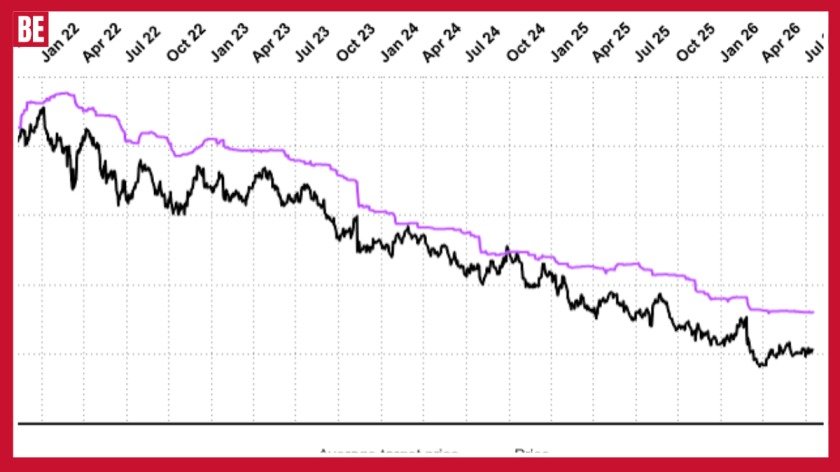
A Diageo share price chart can help investors understand how the stock has behaved over different periods. A one-day chart is useful for observing short-term trading, while a five-year or ten-year view can provide more meaningful information for investors with a long-term strategy. Historical data can show previous peaks, declines, recovery periods and the market’s reaction to major company announcements. Investors should also compare these movements with earnings, dividends and wider economic conditions. A falling share price does not automatically mean that a company is becoming less valuable, just as a rising price does not prove that the underlying business is improving.
When analysing the chart and historical performance, investors should consider:
- Daily movement: Shows short-term buying and selling pressure.
- 52-week range: Helps put the current valuation into recent context.
- Five-year performance: Provides a broader view of the company’s market performance.
- Trading volume: Can indicate the strength behind significant price movements.
- Dividend history: Shows how shareholder income has changed over time.
- Company results: Helps explain major rises or falls in the market price.
- Valuation: Compares the share price with earnings and future growth expectations.
The Diageo share price history can also be used to understand how investor expectations have changed. When a company experiences strong sales and earnings growth, investors may be prepared to pay a higher valuation. If growth slows, the market may reduce the valuation multiple even if the company remains profitable. This is especially relevant for Diageo because its growth expectations have become more cautious. Historical highs should therefore not automatically be treated as future targets. A previous valuation may have been supported by stronger growth expectations, higher dividend expectations or different economic conditions. Looking at historical performance alongside financial statements provides a much more realistic picture of the company’s investment potential.
Investors can also use a chart to identify the effect of important announcements. Results, dividend changes, management updates, restructuring plans and changes to financial guidance can cause sudden movements. However, the market reaction immediately after an announcement does not always represent the long-term impact. Sometimes a negative reaction creates an opportunity if the underlying financial position remains strong. At other times, an apparently small decline can signal a major change in future expectations. This is why chart analysis works best when combined with fundamental research. Technical patterns may explain what the market is doing, but company results help explain why it is happening.
Diageo Financial Results, Brands and Business Performance
Diageo’s greatest competitive advantage is its portfolio of internationally recognised brands. The group operates across beer, whisky, vodka, tequila, gin, rum, liqueurs and ready-to-drink categories. This provides diversification and allows the company to benefit from different consumer trends. Guinness has been one of the strongest recent performers. During the first half of fiscal 2026, Guinness generated 10.9% organic net sales growth, with growth across most regions except Asia Pacific. The performance is important because it demonstrates that established brands can still produce significant growth when they remain culturally relevant and well positioned. Diageo’s spirits RTD portfolio also recorded strong growth, providing another potential source of future expansion.
The challenge is that strong performance from individual brands must be large enough to offset weaker areas of the portfolio. North America remains particularly important because of its size and Diageo’s exposure to premium spirits. Consumers facing economic pressure may reduce purchases of expensive alcohol or switch to lower-priced alternatives. This creates a difficult balance for management. Raising prices can protect revenue and margins, but excessive price increases may reduce volumes. Cutting prices can support demand but may weaken premium positioning. The ideal strategy is to use brand strength, innovation and carefully targeted pricing to maintain consumer loyalty. Investors should therefore look at both value growth and volume trends when assessing whether demand is genuinely improving.
The cost-saving program is another important part of the financial story. A $1 billion savings target could make a meaningful difference if management removes unnecessary complexity and improves productivity. However, cost reduction needs to be handled carefully. Marketing and innovation are essential for maintaining the value of consumer brands, so cutting these areas too deeply could create problems several years later. Investors should monitor whether operating margins improve alongside stable or improving sales. Free cash flow is also crucial because it shows whether the business is generating enough cash to support dividends, reduce debt and fund future investment. A successful turnaround would ideally produce stronger margins and cash flow without weakening the company’s long-term competitive position.
Diageo Share Price Forecast, Dividend and Future Growth
The Diageo share price forecast should be considered through several possible scenarios rather than a single numerical target. In a positive scenario, North American spirits demand stabilises, Guinness maintains strong growth, RTD products continue gaining customers and management delivers its planned savings. If these factors result in higher margins, stronger free cash flow and lower debt, investor confidence could improve substantially. In a base scenario, sales may recover slowly while cost savings provide gradual margin improvement. This could support a moderate recovery in valuation without returning immediately to previous market highs. A negative scenario would involve continued weakness in major markets, weaker consumer demand and insufficient improvement from the restructuring programme. The important point is that forecasts are assumptions, not guarantees.
The dividend is particularly important for existing shareholders. Diageo historically attracted income-focused investors because of its reputation for returning cash to shareholders. However, the company reduced its dividend during fiscal 2026 to provide greater financial flexibility. Management has indicated a future payout policy targeting approximately 30% to 50% of earnings, alongside a minimum annual dividend floor of 50 cents. This means investors should reconsider the role of dividend income in their overall investment thesis. A lower payout can be disappointing in the short term, but retaining cash can strengthen the balance sheet if the money is used effectively. Investors should therefore examine dividend affordability, free cash flow and debt rather than simply comparing today’s yield with historical levels.
Future growth is likely to depend on a combination of brand strength, geographic recovery and improved efficiency. Diageo has adopted a more cautious long-term outlook, with management expecting low-single-digit organic net sales growth through 2029. That guidance is important because it suggests investors should not build expectations around a rapid return to the growth rates of the past. Instead, the potential investment opportunity may come from buying a high-quality brand portfolio during a period of weaker performance and waiting for operational improvements. If modest revenue growth is combined with expanding margins, lower debt and better cash generation, shareholder returns could still become attractive.
Diageo Share Price NSE, Nasdaq and International Markets
Searches for Diageo share price NSE and Diageo share price Nasdaq can sometimes confuse investors because the company’s principal UK listing is on the London Stock Exchange. The London-listed shares trade under the ticker DGE and are the most relevant quotation for many UK investors. International investors may find other instruments or market quotations that provide exposure to Diageo, but these should not automatically be compared with the London shares as though they were identical prices. Currency differences, trading hours, liquidity, market structure and the exact type of security can all affect the displayed value. Investors should always establish whether a quotation represents ordinary shares, a depositary instrument or another form of exposure.
Currency is particularly important because Diageo is a global business with substantial overseas revenue. Changes in the pound against the US dollar and other currencies can influence the value of reported earnings when international results are translated into the company’s reporting currency. A favourable currency movement can make reported results appear stronger, while an unfavourable movement can create pressure even when underlying demand is relatively stable. This is why investors should pay attention to organic growth as well as reported figures. International exposure remains one of Diageo’s strengths because the business is not dependent entirely on the UK economy, but it also creates additional financial complexity.
Investors searching for overseas market information should also check whether prices are live or delayed. Search engines and financial websites can sometimes display different timestamps, currencies or data providers. This can create apparent differences that are simply caused by trading hours or currency conversion. For UK investors, the London-listed DGE quotation is normally the natural starting point. International market information can still be useful for understanding global sentiment, but the fundamental investment case remains linked to Diageo’s revenue, profit, cash flow, debt, brands and management strategy rather than the market where a particular quotation happens to be displayed.
Is Diageo a Good Investment? Outlook, Value and Final Verdict
Whether Diageo is a good investment depends on the investor’s objectives and time horizon. The company could appeal to investors who believe its brand portfolio remains exceptionally valuable and that the current weakness represents an opportunity for a long-term recovery. Its global presence provides diversification, while Guinness and RTDs demonstrate that the company can still generate strong growth in selected areas. The cost-saving programme also creates the potential for higher margins. However, investors should not treat Diageo as a risk-free defensive share. The reduced dividend, weaker recent sales, North American pressure and high debt mean that the turnaround needs to deliver tangible results. Investors should therefore judge the company on its financial progress rather than simply assuming that famous brands will guarantee recovery.
The most important question is whether management can turn its operational improvements into sustainable free cash flow. A successful turnaround would involve several developments happening together: sales stabilising, margins improving, debt falling, brands maintaining their strength and consumer demand becoming more predictable. If these trends appear over several reporting periods, the market could become increasingly confident in the company’s future. If sales continue falling and cash generation remains weak, the investment case becomes less convincing. This means patience is important, but patience should not mean ignoring evidence. Long-term investors should regularly review whether the original reasons for owning the shares remain valid.
For investors considering Diageo today, valuation is just as important as business quality. A strong company can produce poor investment returns if purchased at an excessive valuation, while a temporarily troubled company can become attractive if the market price already reflects a large amount of bad news. Investors should therefore compare the company’s expected earnings, free cash flow, dividend, debt and growth prospects with its market value. The decision should also take account of portfolio diversification and personal risk tolerance. Diageo may be suitable for someone seeking a potential recovery in a global consumer brand portfolio, but it may be less attractive for someone who requires rapidly growing dividend income or predictable near-term earnings.
Frequently Asked Questions
Is Diageo a buy, hold or sell?
Diageo may suit investors who believe its turnaround strategy can succeed.
Consider valuation, debt, dividends and future earnings before investing.
What has happened to the Diageo share price?
The shares have faced pressure from weaker spirits demand and reduced growth expectations.
North America has been challenging, while Guinness and RTDs have performed more strongly.
Does Warren Buffett own Diageo?
Berkshire Hathaway’s reported portfolio showed that its Diageo position had been exited.
Investors should check the latest filings because portfolio holdings can change.
Will Diageo pay a dividend?
Diageo continues to pay dividends, although the payout was reduced during fiscal 2026.
Future payments will depend on earnings, cash flow and the company’s dividend policy.
What could make Diageo shares recover?
Improving North American demand, stronger margins, Guinness growth and successful cost savings could help.Lower debt and stronger free cash flow could also improve investor confidence.
Conclusion
Diageo is still a significant global drinks business with strong brands and opportunities in markets like Guinness and ready-to-drinks. But poor performance in recent times, competitive pressures in North America, financial risk factors, and the lower dividend make the investment scenario somewhat different. The turnaround strategy of the company, cost cutting, lowering debts and future cash flows of the company will play a key role for the investors. The investors must not just look at daily market activity but they should rather look into the earning strength, margins, free cash flows, valuations and dividend strength of the company.


Best Places to Visit in UK Top Destinations

Vernon Kay Biography Age Wife Career

Best Beaches in UK Top Places to Visit
-

 Uncategorized2 months ago
GB News Presenters Female Current Hosts Newsreaders and Journalists
-
 Uncategorized2 months ago
Good Morning Britain Presenters Today’s Hosts and Political Team
-

 Uncategorized2 months ago
Shefali Oza Biography Age BBC Career Husband and Net Worth
-

 Uncategorized2 months ago
Rip Off Britain Presenters Ages Cast Hosts and Everything You Need to Know
-

 Things To Do2 months ago
Universal Studios Great Britain Opening Date Rides Map and Location
-

 Uncategorized2 months ago
Pride of Britain Awards How to Nominate a UK Hero
-

 Uncategorized2 months ago
Emily Campbell Weight lifting Career Olympic Medals and Life Story
-

 Uncategorized2 months ago
Great Britain at the Winter Olympics Medals Full History